
 2 months ago
62
2 months ago
62
ARTICLE AD BOX
1 hour ago
Jessica LaneEast Yorkshire and Lincolnshire

 BBC News
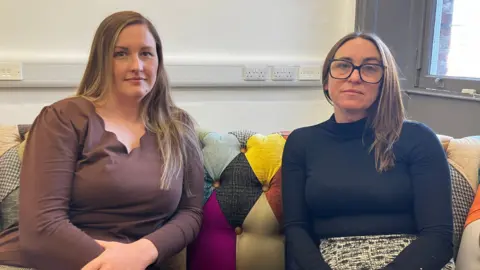
Donna Watton, left, and Rachael Beddow Davison, right, are taking Vodafone to court
Two women say they were left tens of thousands of pounds in debt and with mental health issues after running Vodafone franchise shops.
Donna Watton and Rachael Beddow Davison, from Lincolnshire, are among 62 former franchisees taking the phone company to court.
In their legal claim, the group alleges that Vodafone – which has more than 350 franchise stores – made business decisions in "irrational, arbitrary" ways.
Vodafone says it has reviewed and made improvements to the franchise programme over the past two years and has tried to resolve the legal claim, including by offering a settlement, which it says was rejected.
But separate to their legal case, Watton and Beddow Davison say they suffered years of difficulties, which have had a huge impact on their mental health and finances.
"They sold us a dream, but the reality was something different," Beddow Davison says.
 Reuters
Vodafone says it runs a successful franchise business with more than 350 stores in the UK
Watton, 44, and Beddow Davison, 45, were store managers employed by Vodafone when they were offered the chance to take over their stores as franchises in 2017.
It meant running their own phone shop businesses under the Vodafone brand and using the company's business systems.
Watton, who joined Vodafone in 2008 and managed a store in Boston, says the franchise offer "looked amazing" and she was excited about the opportunity to be her own boss.
"I was working seven days a week and putting so much effort in. I made it into a really profitable business," she explains.
Beddow Davison, who had been a store manager since 2013, says she "jumped at the chance" to take on the Lincoln shop as a franchise.
"This was the dream. Vodafone said they wanted to make their managers entrepreneurs," she adds.
According to the court claim, the franchisees allege that Vodafone made changes in 2020 that affected their businesses. They claim Vodafone suddenly cut commission on upgrades to phones and other packages, and shortly after this, brought in a fines and penalties system.
Separate to their legal case, the women told the BBC that the commission on upgrades was cut by nearly half. Vodafone has indicated the reduction was approximately 40%.
The women described the fines and penalties system as "extremely disproportionate" and said it cost them thousands of pounds.
Beddow Davison says that on one occasion, in March 2022, she was charged more than £3,260 when a member of the team was accused of being "abrupt" with a customer on a web chat.
Also separate to the court claim, Watton and Beddow Davison say Vodafone encouraged them to take on additional stores with no trading history or customer base.
They say they were told that if these stores did not make £40,000 in the first year then Vodafone would make up the difference, which they say did not happen.
It is understood Vodafone argues there was never a promise of a profit guarantee and the £40,000 figure was a goal for earnings in year one.
Additionally, Watton says Vodafone did not renew her contract to run her profitable Boston store.
 BBC News
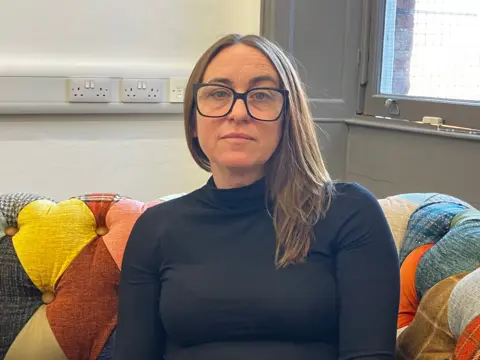
Beddow Davison says a lack of clarity about her future left her feeling paranoid
Also separate to the court claim, the women say footfall counters were faulty, which meant Vodafone thought their stores should be making more revenue than was possible.
Vodafone has indicated that the footfall technology was owned and managed by a third party company, which it says investigated issues raised.
The women say they raised concerns with Vodafone many times.
"If it had been how the franchise programme was in the beginning it would have been absolutely fine and everything would have gone the way I planned," Watton says. "But unfortunately the goal posts were massively changed."
The women told the BBC they ran up debts as a result of fitting out new stores and running unprofitable stores that lost money, in addition to Covid loans and Vodafone's fines system.
Beddow Davison, a single parent with three children, says she invested thousands of pounds of her own money paying rent in advance and fitting out the back office when she agreed to take on a new franchise store in Gainsborough, which then lost up to £10,000 a month.
By November 2022, she felt she could not continue.
"I was paranoid, thinking they were trying to give my store to somebody else. My Lincoln store was up for renewal and they hadn't been talking to me about it," she says.
"I just thought it would be better if I wasn't here. I tried to take my own life.
"I thought my children would be better without me. My parents live next door and luckily my mum came over. Otherwise, I wouldn't be here today."
 BBC News
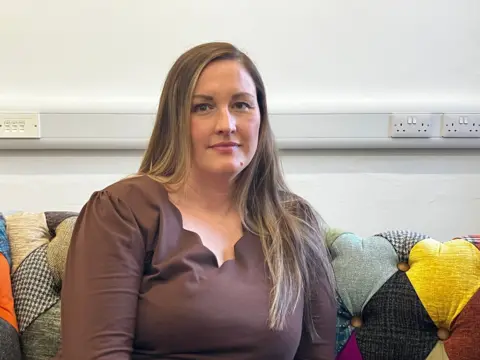
Watton says her family was left feeling "stress and pressure"
In October 2023, Watton says she was told Vodafone would not be renewing her contract to run the Boston store with two months' notice.
At the time, she had a five-month-old baby and two stepchildren.
"I can't say I would do it, but I did have suicidal thoughts. It was terrible," she adds.
"Vodafone put me in such a bad situation. Days out, holidays, we can't afford them. We've still not been on a family holiday abroad. This has had such a huge effect on the whole family."
The BBC understands that Vodafone believes changes made to franchise commission structures were done lawfully under existing contracts and Watton's contract on the Boston shop came to a natural end.
Vodafone said new stores were fitted out with branding and IT systems at its expense and franchisees operating stores that did not make a profit in the first 12 months after opening received a payment to cover any losses.
It is also understood that Vodafone argues that fines, or clawbacks as they are sometimes known, were considered only in circumstances that resulted in, or presented a foreseeable risk of, consumer harm, in line with the regulations of the Financial Conduct Authority, and that they have been revised since the franchise programme began.
A spokesperson for Vodafone said: "We are sorry if any franchisee had difficulty operating their business.
"Over the past two years we have reviewed the programme, investigated any concerns raised and have made several improvements to the model and sought to rectify any issues.
"We value highly the mental health and wellbeing of our people and are deeply saddened to learn that some former franchisees experienced mental health challenges."
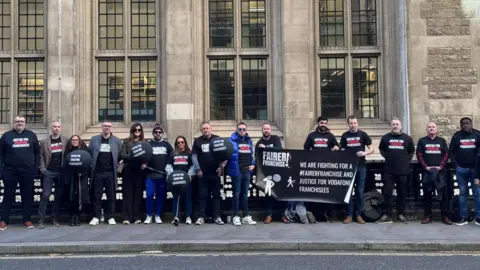 Fairer Franchise
Supporters of the franchisees outside the Rolls Building, a court centre, in London
Commenting on the legal claim, the Vodafone spokesperson added: "We have tried to resolve this complex commercial dispute on multiple occasions, and even offered a settlement that would ensure no claimants had debts linked to their franchise. We were disappointed to learn that our proposals were rejected by the company funding the claim.
"We continue to run a successful franchise business in the UK with over 350 stores, and the majority of our partners have expanded their business with us."
The franchisees' court case is likely to be heard in late 2027.
In March, the MP Abtisam Mohamed, who represents Sheffield Central, wrote a letter to Vodafone signed by a cross-party group of eight other MPs, in which the accounts given by former franchisees were described as "deeply troubling". The MPs have called for a meeting with Vodafone bosses.
Beddow Davison has also been supported by her constituency MP Richard Tice, who represents Boston and Skegness, where Watton ran her shop. He said: "We've had an adjournment debate (in parliament), we have met with Vodafone and it's a really important issue that needs sorting and lessons need learning."

 English (US) ·