
 2 months ago
63
2 months ago
63
ARTICLE AD BOX
Just now
Phil Chapmanat Windermere

 BBC
BBC
The Environment Agency said it hoped the study would help protect water quality at Windermere
Research looking at how to protect the future of England's largest lake showed potential to "fully cancel out" the projected impact of climate change on it.
The Environment Agency (EA) has published a study exploring ways to reduce pollution in Windermere and protect its water quality from algae growth, which can make water unsafe to swim and harm wildlife.
The EA said the "most ambitious option" tested involved removing all wastewater, including from septic tanks.
"[This] was enough to fully cancel out the projected effects of climate change on the lake in the next 50 years," the organisation said.
The EA's research, in collaboration with the UK Centre for Ecology and Hydrology, suggested Windermere's mean temperatures would rise by 2.4 to 2.5C by the late 2070s due to climate change.
This temperature rise, assuming nothing changed with the way the lake was managed in terms of local agriculture and sewage entering the lake, would lead to an increase in the waterbody's concentration of nutrients such as phosphorus and nitrogen.
These nutrients make "harmful" blue-green algae more likely which can be dangerous to people and animals.
But if all sewage was stopped from entering Windermere, the number of days each year where the amount of the blue-green algae in it which exceeded World Health Organization limits would fall to zero, even when taking into account the lake's projected temperature rise, the study found.
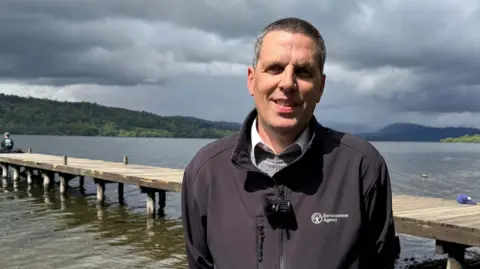
Andy Brown said the study was unique because it combined two separate computer models
The EA's water regulation manager Andy Brown said the models showed how the lake could be protected for "future generations".
He said: "This research builds our understanding further and gives us and our partners a stronger scientific foundation for making the right decisions about where investment needs to go."
The study also looked at two further approaches - the impact land managers and farmers could have to reduce nutrient run-off from their land and the treatment of wastewater.
The EA said: "All three approaches reduced the number of days when blue-green algae reached levels the World Health Organisation considers a risk to human health, even when the additional pressures of climate change were factored in."
However the organisation said the research "makes clear that there is no single solution that works for every lake".
Esthwaite Water, a small lake draining into Windermere, "remained a concern under every future scenario" tested.
The EA said: "This is because factors like a lake's size, depth and historic activities, all affect how it responds to pollution and climate change.
"Managing these pressures well means that understanding each lake on its own terms is essential."
The study used computer modelling to understand how climate change could alter how nutrients reached Windermere and Esthwaite Water.
Brown said the work was unique because it combined two different computer models that would not normally "talk to each other".
"I imagine it like getting a cable that enables an iPhone to talk to an Android phone," he explained.
He added more inspections and enforcement action against utility companies had also been undertaken to tackle pollution concerns in the area.
"It's important that we do work based on evidence and that we work in collaboration," he said.







 English (US) ·