
 2 months ago
67
2 months ago
67
ARTICLE AD BOX
8 minutes ago
Kate WhannelPolitical reporter

 UK Parliament/ PA
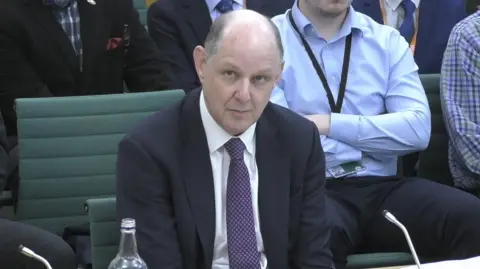
The Foreign Affairs Committee has been hearing evidence about the vetting of Lord Mandelson to be the UK's ambassador to the United States.
The prime minister sacked Lord Mandelson from the role in September 2025 over his links to the convicted sex offender Jeffrey Epstein, but has been facing ongoing questions about the appointment ever since.
Sir Keir Starmer's former chief of staff Morgan McSweeney will give evidence to the committee at 11:00 BST but first it heard from Sir Philip Barton, who was the senior civil servant at the Foreign Office, when the PM decided to send Lord Mandelson to Washington DC.
Here are the key points from his evidence so far.
No consultation on Mandelson appointment
Sir Philip said the first time he was aware of the decision to appoint Lord Mandelson was on 15 December 2024 - five days before the prime minister publicly announced it.
Asked if he believed he should have been consulted about the appointment, Sir Philip said the job was one of the UK's "major" diplomatic posts and that he thought it was "reasonable" that he should have been involved.
But he also noted that it was a political appointment rather than an internal civil servant recruitment and concluded he was "a bit conflicted" on the question.
He later said that there had been "no space or avenue or mechanism" to express any concerns he might have felt about the appointment.
Concerns about 'toxic' Epstein links
Conservative MP Aphra Brandreth asked Sir Philip if he'd been asked, would he have expressed worries about picking Lord Mandelson.
He replied he was worried that Lord Mandelson's links to Epstein "could become a problem".
He later said he did not know what further information would come out about the friendship between the two men but at the time had identified that Epstein was "a toxic hot potato subject" in the US.
He added that Donald Trump's team had been "happy" with the existing ambassador Dame Karen Pierce and had been "blindsided" by the Lord Mandelson appointment.
No 10 'uninterested' in Mandelson vetting
Last week, Sir Philip's successor at the Foreign Office Sir Olly Robbins said Downing Street had been "dismissive" of the vetting process.
Asked about that description, Sir Philip said: "The word I would use is disinterested."
He said the focus was on making sure Lord Mandelson was able to start his job by the time of Trump's inauguration.
Sir Philip said that no-one had asked him, given the risks, to ensure that the vetting process was "rigorous".
'Absolutely' pressure to get vetting done
Sir Philip partly backed up Sir Olly's assertion that the Foreign Office faced "constant pressure" to complete the vetting process.
He said there were two areas where pressure could have been applied - on the substance of the vetting case, and on the speed of the vetting.
On the substance, he said that he was "not aware" of any pressure but there was "absolutely" pressure to "get it done by a particular time scale".
"The top of the government is saying the prime minister has decided he wants Mandelson and he wants it done in that timescale, so that's what creates the pressure."
Last week in the House of Commons, the prime minister said "no pressure existed whatsoever" on the case.
Over the weekend, he expanded on his comment, telling the Sunday Times there were "different types of pressure".
"There's pressure - 'can we get this done quickly?' – which is not an unusual pressure. That is the everyday pressure of government."




 English (US) ·