
 2 months ago
75
2 months ago
75
ARTICLE AD BOX

 ThinkFashion
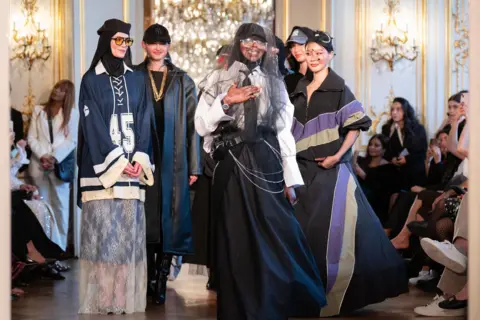
French designer Fatou Doucouré (centre) said exhibiting her designs in Paris made her feel women who wear headscarves could "take on any role in society"
Paris has held its first ever Modest Fashion Week - hosting nearly 30 designers whose collections include loose, long-cut garments and headscarves.
It's the kind of clothing many Muslim women choose to wear in line with their religious principles - covering their arms, legs and sometimes hair.
There was a particular significance to setting it in France, where hijabs and other religious clothing have frequently made headlines and are restricted in certain settings.
Rukaiya Kamba, the creative director of Nigerian brand Flaunt Archive, said the decision to present her collection in Paris came from a "very intentional place".
And as models took to the runway, some young attendees told the BBC they felt the event demonstrated a more inclusive French culture taking shape.
 Rooful Ali
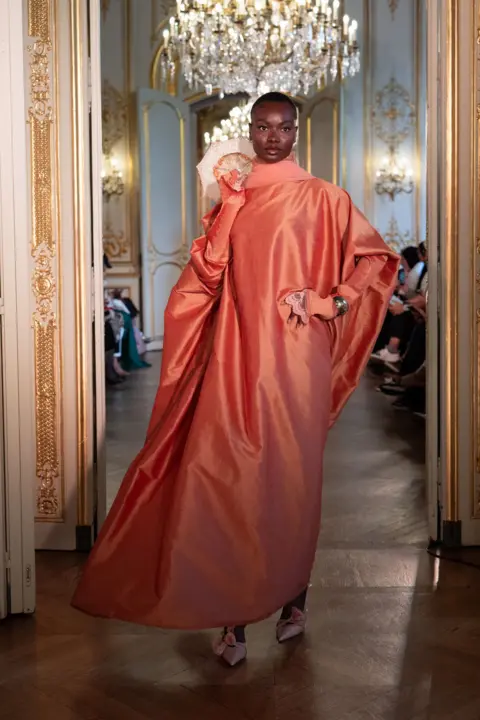
Long, flowy dresses in floral colours lit up the runway
France is home to around 5-7.5 million Muslims according to estimates, and Özlem Şahin, head of the organisation behind Modest Fashion Week, has described Paris as "one of the leading modest fashion capitals in Europe".
Inside Hôtel Le Marois, a mansion just off the Champs-Élsyées, the focus was on florals and nature-inspired hues.
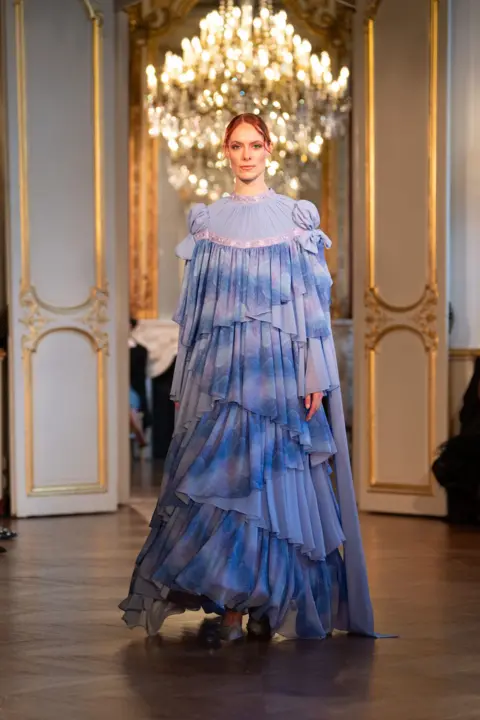
Hicran Önal, the founder and designer behind Turkey-based brand Miha, wore a printed floral tulle dress and told me romance was key to her collection.
Her outfits blend water-like teals and blue, contrasting with natural floral pinks. Indonesian designer Nada Puspita followed suit, but with cleaner lines.
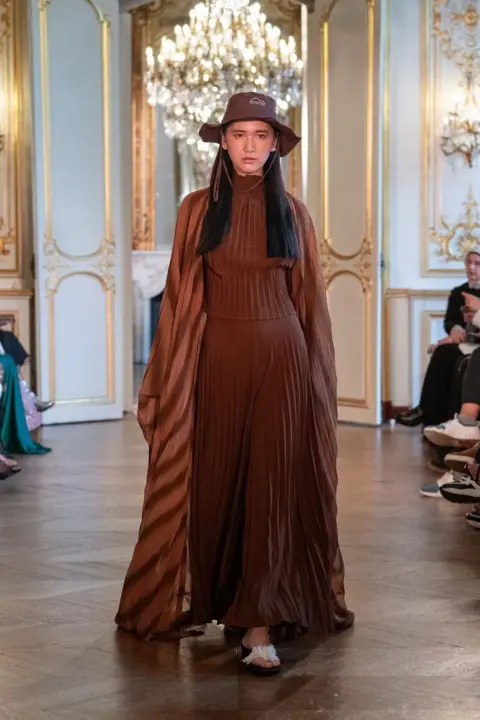
Aisa Hassan, the designer behind Australian brand Asiyam, said she too had been inspired by nature but her references were decidedly warmer - with deeper greens and almost autumnal reds. A bucket hat nodded to her Aussie heritage.
 Rooful Ali
Hicran Önal's "romantic" dresses blend blues and pinks
 Rooful Ali
Warmer hues could be seen in this outfit by Australian designer Aisa Hassan
The softness in Hassan's outfits contrasted with the sporty aesthetic that remains so prevalent in the industry.
French brands Soutoura and Nour Turbans' nylon, black, jewel-toned and boxy garments are heavily influenced by Gen Z streetwear - the kind of modest fashion that's also been championed by sportswear giants Nike and Adidas.
Like Asiyam, Nour Turbans also used headwear to make an impression - styling her model with a beret over a headscarf.
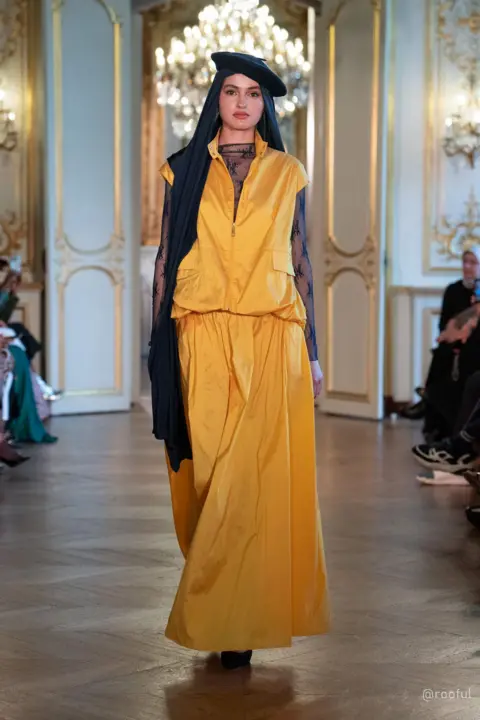 Rooful Ali
Nour Turban's quintessentially Muslim Parisian outfit combined a beret with a headscarf
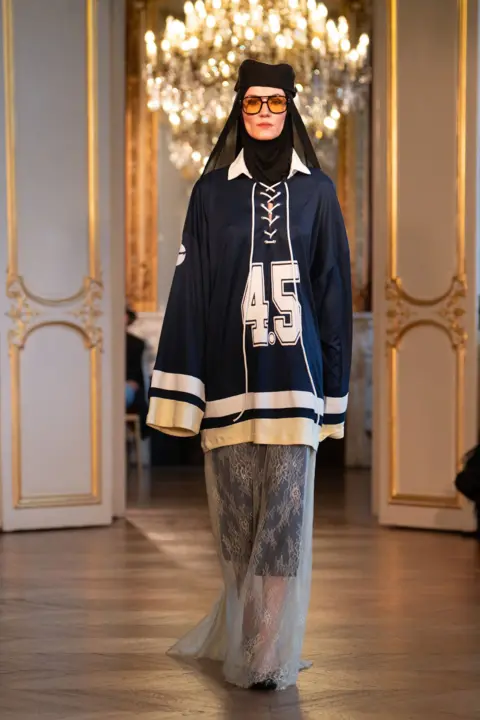 Rooful Ali
Boxy streetwear by Soutoura made for a bold look
The market for modest fashion has grown rapidly in the past decade - with global consumer spending expected to exceed $400bn by next year, according to research firm DinarStandard.
While the industry initially catered to Muslim women specifically, it is increasingly appealing to other religious communities and secular shoppers too.
Soutoura's founder and creative director Fatou Doucouré told me having the event in Paris filled her with pride. She said she had struggled with her hijab in France but today felt it was not holding her back.
This stems from laïcité, the French brand of secularism which decrees the state and public institutions should be free of religion. One consequence is that people cannot wear religious clothing and work in public-sector professions like teaching or the civil service.
Doucouré said exhibiting her collection in Paris made her feel that Muslim women who cover their hair or dress modestly could "take on any role in any society".
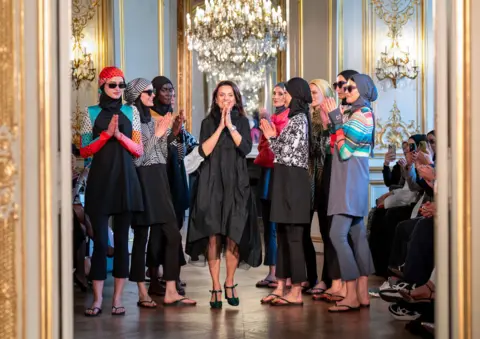 ThinkFashion
Burkinis - worn by these models on the runway - cannot be worn at most public swimming pools in France
Turkish swimwear brand Mayovera showcased a collection of burkinis - a mix of the terms "burka" and "bikini" - covering everything except the face, hands and feet. The item is banned in most public swimming pools in France - but allowed on beaches.
One young French attendee of Malian heritage said the event had brought her joy as someone who had previously faced discrimination due to wearing a headscarf.
Seeing a major show full of international designers in the heart of Paris had made her "never want to leave France".
Another said it felt like something had changed in France, with her hijab no longer feeling like the centre of political discussion. She said she felt that on the streets, too, people had begun to see beyond it.





 English (US) ·