
 4 months ago
73
4 months ago
73
ARTICLE AD BOX
Lucy HookerBusiness reporter

 Getty Images
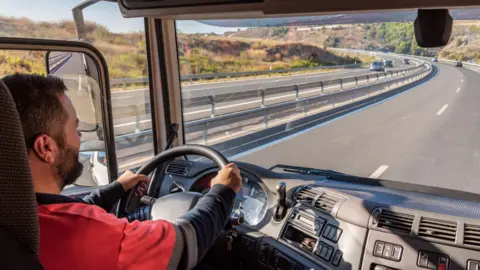
With energy prices still high due to the conflict in the Gulf, governments around the world are being urged to reduce driving speed limits and encourage more working from home.
The International Energy Agency (IEA) has suggested ten measures to reduce the amount of energy being consumed across the world, covering travel, homes and work habits.
The IEA's executive director, Fatih Birol, told the BBC the world was facing "the greatest global energy security threat in history" and it was time for governments to become "more vocal" around how energy was being used.
Such advice can be politically difficult, he admitted, but energy prices meant people had a "big incentive" to adopt new strategies.
Many Asian countries have already introduced measures to limit consumption. Air conditioning cannot cool below 25 degrees in Bangladesh and 26 degrees in Thailand.
Some are introducing shorter hours for schools and university and limiting air travel for public officials. Pakistan and the Philippines have introduced a four-day week for public servants.
The IEA's other suggestions for governments, businesses and individuals include:
- Promoting use of public transport
- Giving private cars access to city centres on alternate days
- Encouraging car sharing and efficient driving habits
- Avoiding air travel where possible, especially business flights
- Switching to electric cooking
It also said there should be a focused effort to preserve liquid petroleum gas for cooking and other essential uses, by switching bio-fuel converted vehicles onto gas and introducing other measures to reduce its use.
Birol said these proposals were in addition to action taken by IEA member countries earlier this month, when they agreed to release 400 million barrels of oil, 20% of its emergency reserves.
He said there could be a further release of stocks if required, something he was already discussing with heads of state and governments.
"I believe the world has not yet well understood the depth of the energy security challenge we are facing," he added.
"It is much bigger than what we had in the 1970s... It is also bigger than the natural gas price shock we experienced after the Russia's invasion of Ukraine."
Following energy price spikes in the 1970s governments had responded with new strategies he said.
"One of them was a big wave of nuclear power plants built around the world," Birol said.
"Second, the car industry went through a major transformation. The amount of oil we use for driving 100 kilometres is halved because of the efficiency improvement in cars, the fuel efficiency."
This time he said he expected there to be a boost to renewable energy generation and battery technology, as well as more investment in nuclear power generation.
With additional reporting from Jonathan Josephs





 English (US) ·