
 5 hours ago
9
5 hours ago
9
ARTICLE AD BOX
By
Culture and Media Editor
Scott Mills' earnings and those of other highly paid presenters may be making headlines, but there is a bigger story contained in the BBC's annual report.
Set against the backdrop of the BBC's ongoing negotiations with the government over a new royal charter, the document features words such as "challenges", "financial pressures" and even "jeopardy". They were repeated in a press conference with senior leaders ahead of its release.
With its current charter set to expire next year and sales of TV licences declining, the BBC needs to persuade the government that its role has never been more vital - and that it needs a new funding model to deliver it.
The optics around this are a strategic choice. I can't remember an annual report where the difficulties for the BBC have been so front and centre. It was a message for the government and a new prime minister in waiting.
But when the new director general said this is "a moment of real jeopardy, not just for the BBC but for public service broadcasting and the UK as a whole", he has a point.
The dominance of the global streamers and changes in media habits are leaving our media institutions very challenged (to coin the BBC's phrase).
For the BBC, there are bald facts in this report.
The number of households paying the licence fee fell by about half a million last year.
The number of TV licences in force has dropped by two million (or 8%) in five years - from 25.3 million in 2020-21 to 23.3 million in 2025-26.
Is this rejection an anti-BBC choice - or a reaction to the fact that, as DG Matt Brittin put it to MPs last week, the licence fee system itself is a "busted flush"? The BBC would argue it's the latter.
On Tuesday, Brittin said the licence fee model was focused on "yesterday's behaviour".
The rules are that you have to buy a licence fee if you watch live TV or use the iPlayer. Before the days of streaming, that meant, for example, if you watched ITV and never turned on BBC, you still needed a TV licence. (By the way, if you listen to BBC radio only, you don't need to pay the fee - which is also an anomaly.)
The BBC is arguing - with some justification - that licence fee payment is down in large part because people aren't consuming live TV in the way they used to. That trend won't reverse. In fact, it will accelerate.
They say fewer than 80% of households pay the fee, but 94% of adults access the BBC. (Although that's not a like-for-like comparison because several adults often live in one household.)
The BBC says licence fee income - the main source of its funding - is down by £1.2bn, or about a quarter, in real terms since the current charter began in 2017.
That was caused by freezes in the licence fee through some of that period, as well as changes in audience behaviour.
But those audience shifts are more dramatic if you drill into the generational divide that is once again evident in this year's report.
While the BBC is still the most-used brand for media for those aged over 35 - with 95% of over-55s and 81% of over-35s using it weekly - it's a very different story for under-35s.
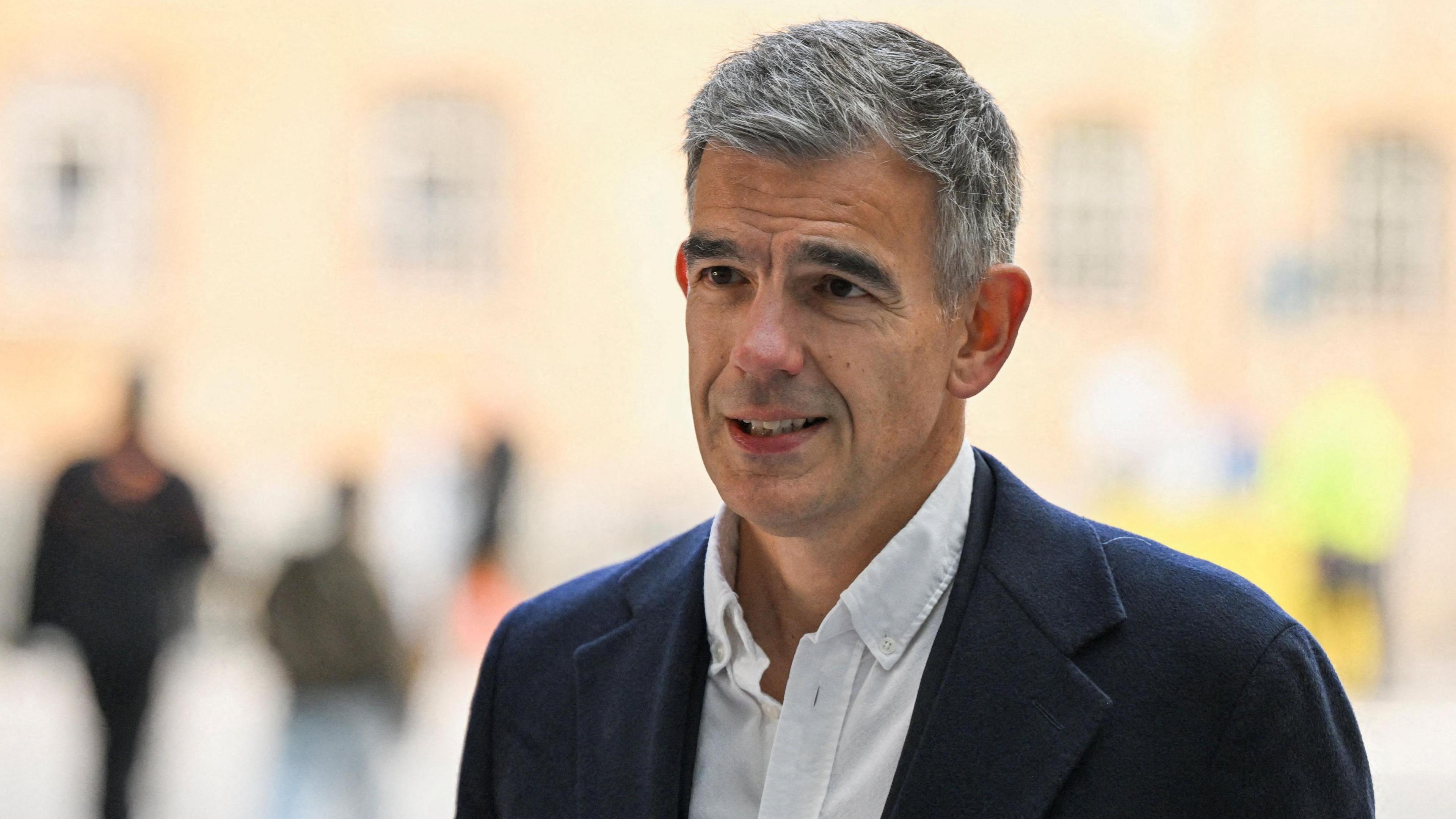 Image source, Reuters
Newly appointed BBC chief Matt Brittin recently described the licence fee as a "busted flush"
YouTube is first choice for that age group. The positive for the BBC is that it is the only UK media brand to make it into the top five brands used by young people - 69% of under-16s and 63% of 16-34-year-olds access the BBC weekly.
The other brands being accessed by young people are - unsurprisingly - all big streamers and social media platforms.
It's not total doom and gloom. Internationally, the BBC is now reaching more than half a billion people for the first time.
Nationally, 94% of UK adults use the BBC on average every month. Whether it's Celebrity Traitors or the World Cup, Sir David Attenborough's 100th birthday celebrations or the provision of fact-checked, accurate reporting, the BBC is to be celebrated - and is being consumed, often in huge numbers.
But in this report there is - again - an acknowledgement that recent editorial mistakes and scandals damaged the BBC's reputation last year.
These include the Gaza documentary narrated by the son of a Hamas official; a documentary about medics in Gaza, which the BBC decided not to show and was later broadcast on Channel 4; and the Panorama about Donald Trump, which has prompted the US president to sue.
He's demanding $10bn (£7.45bn), but the BBC is fighting the case and his claim that he was damaged by the broadcast of a documentary that it says was never shown in the US.
Trump is only mentioned nine times in the 256-page report, with a reiteration that the BBC apologised for splicing two parts of his speech ahead of the Capitol Hill riots.
The BBC's annual income is £3.88bn from the licence fee and another £2.15bn from its commercial operations. To say that $10bn would blow a hole in the accounts is an understatement. The report makes clear "no provision" has been made for footing the bill.
So what about the future? This report was a call to arms from the BBC for a better funding model. Clearly, at a time of financial pressures for people up and down the UK, a demand for more money from individuals would be a non-starter.
Which is why the BBC is essentially arguing that the price could fall for everyone if all those who consumed the BBC actually paid for it.
When it comes to future funding, it's also previously argued that people who watch streaming services should have to pay the licence fee.
Culture Secretary Lisa Nandy has already ruled out funding the BBC through general taxation, a corporate levy on the streamers, or allowing the BBC to show adverts.
But, within BBC circles, there is optimism – misplaced or not - that a new PM might give a new DG renewed hope.
Moving power and jobs out of London – devolution by any other name – looms large in the report. Fifty-nine per cent of the BBC network TV budget was spent outside London last year, although that is down by one percentage point on the year before.
But the BBC is rightly proud of its role in boosting the economies of cities where it has major production centres.
That includes, of course, Greater Manchester through its long-term investment in MediaCity.
Manchester is mentioned in passing 13 times in the report - perhaps (even if inadvertently) tapping into the political mood at a time when Andy Burnham's "Manchesterism" appears to be all the rage.
In the end, this annual report may have one key reader in mind: the new prime minister.

 English (US) ·