
 2 months ago
70
2 months ago
70
ARTICLE AD BOX
18 minutes ago
Ethan GudgeSouth of England

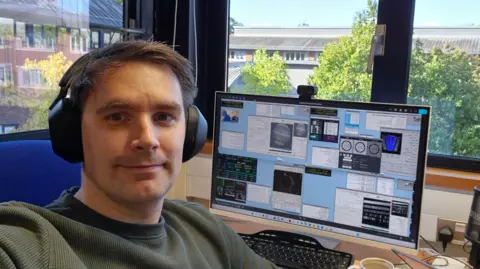 University of Reading
James O'Donoghue's videos have been viewed more than 400 million times
A British university scientist has been honoured with one of US astronomy's most prestigious awards for his work sharing his knowledge of space.
James O'Donoghue, from the University of Reading, has produced more than 100 educational animations on space, which have been viewed more than 400 million times around the world.
The American Astronomical Society (AAS) awarded the planetary scientist the 2026 Carl Sagan Medal, recognising his "unique and impactful" communication to the general public.
The award is named after iconic US scientist Carl Sagan, who brought the universe into people's living rooms in the 20th Century with his 1980 documentary series Cosmos.
O'Donoghue said space was "one of the few subjects that almost everyone is curious about, and that curiosity is worth taking seriously".
He said: "When people understand what's happening on other planets, it changes how they see our own world.
"Sharing that science as widely and accessibly as possible is just as important as doing it in the first place."
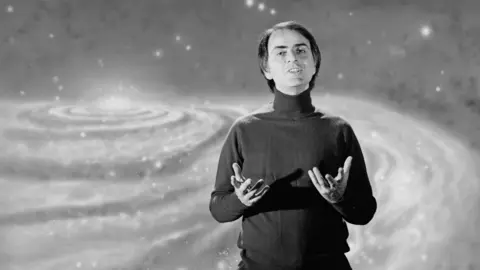 Getty Images
The award is named after US astronomer and scientist Carl Sagan
Alongside his animations, O'Donoghue regularly contributes to national and local media outlets, including the BBC and PBS in America.
He also organises the University of Reading's annual Observe the Moon Night, which is an annual stargazing event that draws hundreds of people to the campus.
Explaining its selection, the AAS said O'Donoghue was an "extraordinarily creative and effective communicator" whilst also being a "recognised leader" in planetary science.
"He truly exemplifies the spirit of the Sagan Prize through the combination of his unique and impactful communication work with his scientific leadership," it added.
Previous winners of the award have been recognised for communicating research on topics including the origins of the Moon and the search for habitable planets beyond our solar system.








 English (US) ·