
 1 month ago
68
1 month ago
68
ARTICLE AD BOX
17 minutes ago
Paul AdamsDiplomatic correspondent

 Reuters
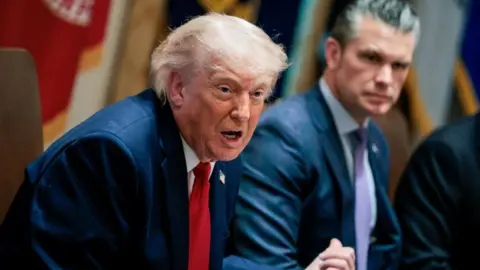
US President Donald Trump said on Wednesday he was "not satisfied" yet with the terms of a deal being negotiated with Iran.
A ceasefire "hanging by a thread". A diplomatic process "making progress". A president "not satisfied". And explosions echoing around the Gulf.
What to make of the current, confusing state of relations between the US and Iran - are we close to peace or sliding back to war?
This week has certainly tested the ceasefire, which came into effect on 8 April and has now lasted considerably longer than the active phase of fighting which preceded it.
Iran responded to the latest US strikes - which included what US Central Command (Centcom) described as a "ground control site" in the southern Iranian port city of Bandar Abbas - with a warning that "aggression will not go unanswered".
Its Islamic Revolutionary Guard Corps (IRGC) then said it had attacked an American air base. It did not say which, but Centcom later said a ballistic missile had been intercepted over Kuwait, where the US has several bases.
Echoing Tehran's language, Centcom called the attack "an egregious ceasefire violation".
It all sounds ominous, but this is still a far cry from the furious exchanges that characterised the first five-and-a-half weeks of this conflict. In that time, the US and Israel launched thousands of sorties against targets all across Iran, and Tehran responded with volleys of drones and ballistic missiles against US bases, Gulf countries and Israel.
The US said on Thursday it had shot down five Iranian drones which "posed a threat around the Strait of Hormuz", suggesting shipping - commercial or military - was once again the focus of concern.
But neither side seems to regard the sort of tit for tat exchanges we have seen this week as marking a return to all-out war.
All the while, a tortured diplomatic process, involving multiple actors, is playing out in the background.
We get glimpses of that process from time to time, but they are partial and fleeting.
On Wednesday, Iranian state media reported elements of what they described as an unofficial draft of a 14-point memorandum of understanding.
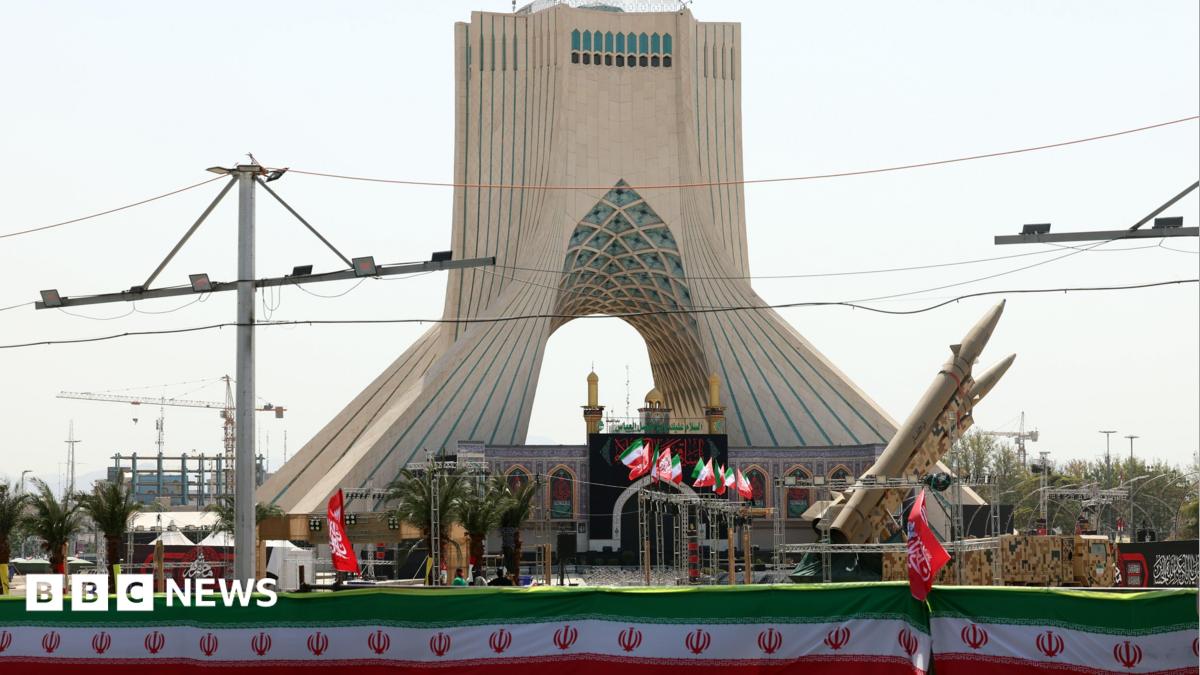
The report included everything Tehran would like to see: the lifting of Washington's naval blockade of Iranian ports, the withdrawal of US forces from the "vicinity of Iran", and the restoration of non-military traffic through the Strait of Hormuz with Iran and Oman in control of the management and routing of vessels.
Notably absent from the report was any talk of Iranian concessions, especially on the all-important nuclear issue.
The White House issued a terse statement, calling the purported draft a "complete fabrication". Later, during the latest televised cabinet meeting at the White House, US President Donald Trump said he was not yet satisfied with proposals for a deal.
Trump said Iran was "starting to give us the things that they have to give us". He did not elaborate and repeated his warning that Tehran's failure to comply would trigger a return to war.
"If they won't, then the man on my left is going to finish them off," he said, turning to US Defence Secretary Pete Hegseth.
There were characteristic signs of impatience too. Asked about reports that Iran and Oman might seek to control the movement of ships through the strait, Trump issued a stark warning to a traditional US ally.
"Oman will behave just like everybody else, or we'll have to blow them up," he said.
Meanwhile, the US Treasury on Wednesday sanctioned Iran's newly formed "Persian Gulf Strait Authority", set up by Tehran to oversee traffic through the Strait of Hormuz.
The Treasury's Office of Foreign Assets Control (OFAC) called the scheme "a new attempt by Iran's Islamic Revolutionary Guard Corps to monetise its campaign of state-sponsored terror".
As always, Trump was doing his best to sound as if the war were going to plan, brushing aside any suggestion that he needed to strike a deal quickly to avoid further spikes in the oil market - or political blowback at November's midterm elections.
But there is no denying that he is in a bind.
A satisfactory deal remains tantalisingly out of reach, and there are some in his own party - to say nothing of Israeli Prime Minister Benjamin Netanyahu - who would like him to go back to war to finish the job.
Similar pressures are at play in Tehran too, where some of the country's most hardline voices are insisting on maximalist goals, arguing that Iran has shown that it cannot be subjugated.
The diplomatic effort, spearheaded by Pakistan, is immensely complex.
The issues which divide the two sides are profound: Iran's nuclear programme, the future management of the Strait of Hormuz, the lifting of sanctions and unfreezing of assets.
The immediate objective - a memorandum which would end the war and set out a road map for the complex diplomatic negotiations that would follow - is proving elusive.
On Wednesday, US Secretary of State Marco Rubio said the coming hours or days would show whether progress was possible.
For all the domestic pressures at play on both sides and the febrile atmosphere in and around the Gulf, neither Iran nor the US seems interested in a return to war.
Despite appearances, the ceasefire - now more than seven weeks old - is still holding.





 English (US) ·