
 2 months ago
73
2 months ago
73
ARTICLE AD BOX
Just now
Chris MasonPolitical editor

 PA Media
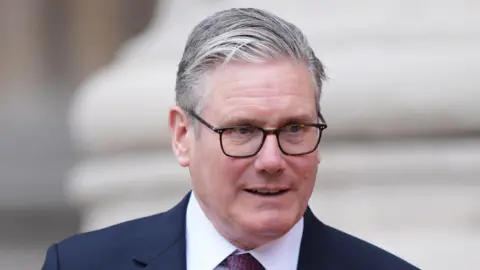
This was the week questions about the future of the prime minister took a turn for the worse for Sir Keir Starmer.
If you had asked me a fortnight ago about the sentiment we were picking up from Labour MPs about Sir Keir's future in Downing Street, I would have told you that pressure from them appeared to have eased.
Labour MPs were still looking towards the elections around Britain a week on Thursday with trepidation bordering on horror, but many talked with pride about how their leader was handling the war in the Middle East and the fervent leadership chatter had eased, at least a bit.
Since then, an unremittingly, relentlessly, incessantly grim story, if you think of it from the perspective of the Labour Party, has been squatting on the news agenda, expelling the potential for anything they would rather be talking about getting any attention.
And yes, just days before those crucial elections to the Scottish and Welsh parliaments and to many English local authorities.
So you won't be remotely surprised when I tell you that it has left Labour folk from the cabinet down gloomy, run down and irritated.
We have seen an element of that play out publicly.
Ministers deployed on what is known as the morning round, where they trundle from one studio to the next, often in possession of a government announcement but also braced for an avalanche of questions on the story of the day, haven't hidden their frustrations as assiduously as they might once have done.
The aforementioned Miliband, a former party leader, acknowledged on Sky News that when Lord Mandelson was appointed to the ambassador's job in Washington he had worried "it could blow up" and he had discussed those concerns with cabinet colleague David Lammy, who he said shared them.
What is telling is less that that was his view at the time, and more that it is something he is willing to share publicly now.
He also said, on Good Morning Britain, that it was "a fair point" that enough was already known about Lord Mandelson when he got the job that it would have been possible to conclude at the time that his appointment was not just risky but wrong.
Later in the week it was the turn of Work and Pensions Secretary Pat McFadden to head from camera to camera.
He is, usually, a doughty defender of the government and he still was.
Foreign Secretary Yvette Cooper went further – she was publicly aghast at this particular revelation.
Each example here felt to me like straws in the wind – easily dismissed in isolation but alongside everything else an indicator of the prime minister's declining authority.
Chancellor Rachel Reeves and Health Secretary Wes Streeting were among those who spoke up on this.
There is nuance here - the prime minister himself had expressed concern too, we are told.
And of course cabinet ministers will fret about this - they deal daily with their permanent secretary and senior civil servants and rely on them to deliver their agenda.
But again, and yes it's subtle, there was a willingness to let it be known the consequences of No 10's actions had been raised.
 Reuters
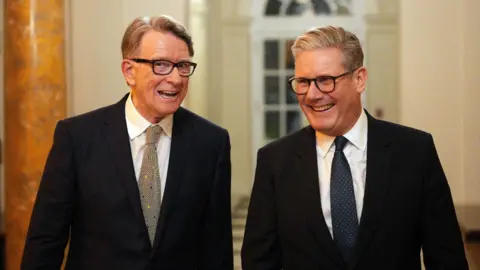
The row over the appointment of Lord Mandelson, pictured here with the PM last year, has blown up again over the past week
We then had Labour backbencher Jonathan Brash telling GB News Sir Keir's time was up and his colleague Dan Carden on BBC Newsnight being a little less blunt but nonetheless saying "there is definitely a question about the future of the Labour government."
The left-wing political magazine the New Statesman chimed in too. Its editor, Tom McTague, a thoughtful writer not known for hyperbole, said of Sir Keir: "The clamour is growing: he cannot do the job."
His article quoted Boris Johnson's public reflection when the time was up for him in Downing Street, when he said "when the herd moves it moves".
It was a reference to his parliamentary party, the crucial electorate for any party leader: it is their MPs who decide their fate.
And this week, the Labour herd is chuntering; it is chewing the leadership cud again.
It is worth reflecting that the fundamentals that brought about Labour's big wobble over Sir Keir in February are still there, as are the fundamentals that meant he survived that moment.
Let's take each in turn: the government is deeply unpopular and Sir Keir is more so.
This, alongside the evergreen critique made of this government, by those on its own side and its opponents, that it lacks a clear sense of direction and purpose, is the fundamental that makes Labour folk ponder how long he should have left.
But there is another fundamental too. The party cannot agree who it would like to replace him and plenty of the leading candidates have tricky things to overcome.
The former Deputy Prime Minister Angela Rayner is still in a wrangle with the taxman.
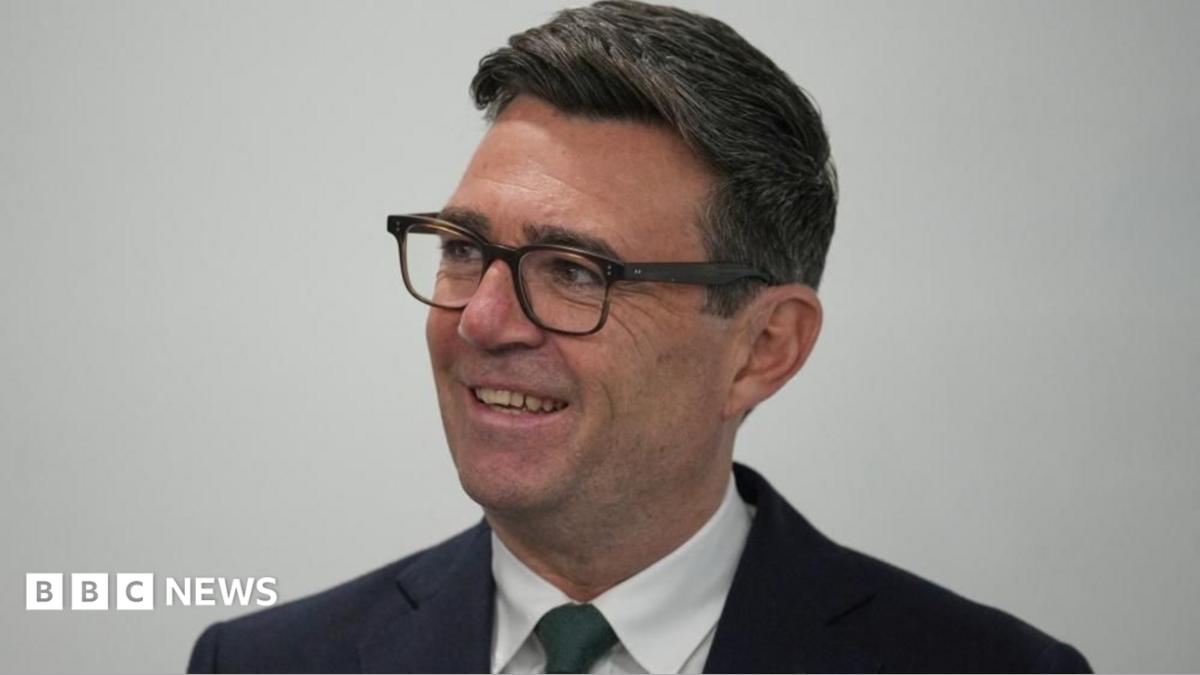
The mayor of Greater Manchester Andy Burnham isn't an MP.
And Streeting, the health secretary, is trying to shake off his connection and previous friendship with Lord Mandelson.
The prospect of a leadership race, while in office, horrifies many Labour MPs because critics would label it self-indulgent and naval gazing – and it would deliver a new prime minister with no mandate from the electorate.
It feels then something like that classic philosophical paradox of an immovable object encountering an unstoppable force: logically impossible because the existence of one precludes the other.
So far at least, the fundamentals standing in the way of toppling the prime minister have proved stronger than those arguing for change.
The huge question now is whether that changes when the Labour Party confronts the likely grizzly reality of the electorate's verdict early next month.




 English (US) ·